
You need a euro before a trip, school fees abroad, or a payment to a supplier in Europe, and the number on Google isn’t the number you’ll actually get at the bank or from your local BDC. That gap catches a lot of Nigerians off guard, especially when the euro exchange rate to naira shifts within the same week because of CBN policy moves, oil revenue swings, or just demand pressure in Lagos and Abuja markets.
This article gives you a straight answer on the euro to naira exchange rate today, showing both the official interbank figure and the parallel market rate traders quote on the street. Understanding the difference matters more than most people realize, because using the wrong rate can throw off your budget by thousands of naira on a single transaction.
We’ll walk through where the naira euro exchange rate currently sits, why the official and black market numbers rarely match, what drives daily movement, and how to convert your euros accurately whether you’re sending money home, paying for goods, or just watching the market. By the end, you’ll know exactly how to read any euro to naira quote you come across.
Why the euro to naira rate matters to you
Money moves differently once you understand what a shift in the euro naira exchange rate actually costs you. A one-naira change per euro sounds small until you’re converting 5,000 or 10,000 euros for school fees, rent, or a business shipment. At that scale, a small daily swing turns into tens of thousands of naira gained or lost depending on timing alone. This isn’t abstract for the average Nigerian reader; it’s the difference between affording that flight to Frankfurt or coming up short at the airport counter.

Who actually feels this daily
Traders importing goods from Germany, Italy, or the Netherlands watch this rate every morning before quoting prices to customers. Students paying tuition to universities in France or Portugal need to know the exchange rate of euro to naira today because a delay of even two days can mean paying a worse rate than budgeted. Nigerians in the diaspora sending euros home to family members care just as much, since remittance apps and money transfer operators often price their own margin on top of the base rate.
- Importers and wholesalers pricing European goods for resale
- Students and parents settling tuition or hostel fees abroad
- Diaspora Nigerians remitting money to relatives
- Small business owners paying European suppliers or freelancers
- Travelers budgeting for holidays or business trips to the Eurozone
The gap between rates costs real money
Because Nigeria runs both an official rate through the Central Bank of Nigeria and a parallel market rate set by street demand, the same amount of euros can convert into two very different naira figures depending on where you exchange it. This is the single biggest reason people get caught off guard when checking the euro exchange rate to naira today: the number they see on a bank app rarely matches what a BDC operator in Lagos will offer.
Checking only one version of the euro to naira rate before a transaction is how people lose money without realizing it.
Getting this wrong isn’t just inconvenient, it’s expensive. Someone converting €2,000 at a rate that’s off by even 20 naira per euro loses 40,000 naira instantly, money that could have covered a month’s data subscription or a week of groceries. That’s why tracking both figures, not just one, protects your budget before you commit to any exchange.
How to convert euros to naira using today’s rate
Converting euros to naira is simple once you have the right numbers in front of you: the current rate and the amount you’re changing. Start by confirming whether you need the official CBN rate or the parallel market rate, since using the wrong one skews your budget before you even step into a bank or meet a BDC operator.
The basic formula
Multiply the euro amount by the current rate to get your naira value. If you’re checking the today exchange rate euro to naira on a currency site, the math stays the same regardless of which source you pull the number from.
Naira Amount = Euro Amount x Current Euro to Naira Rate

Example:
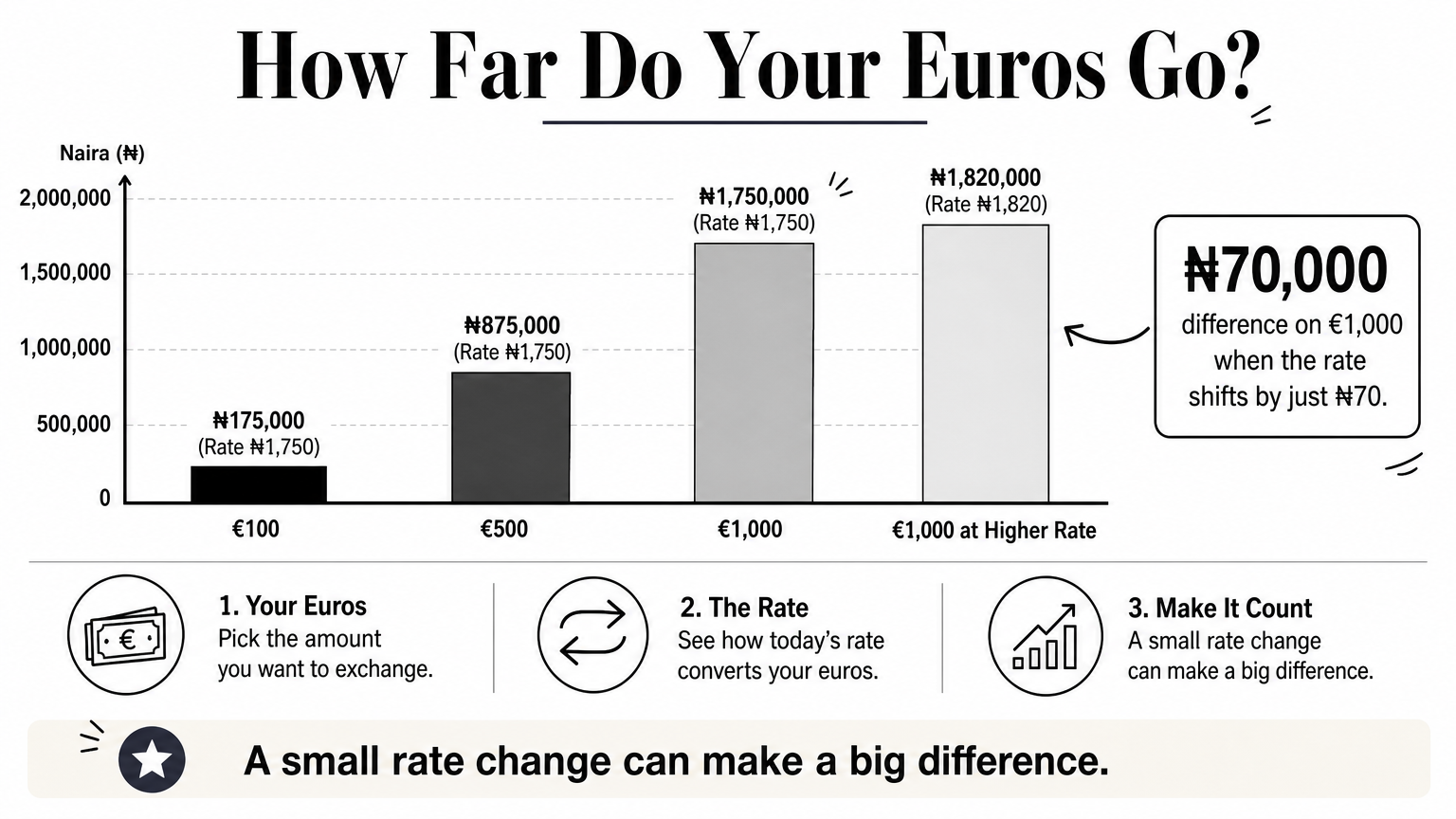
€500 x ₦1,750 = ₦875,000
Always confirm which rate a website is quoting before you multiply, since official and street rates can differ by hundreds of naira per euro.
A quick reference table
Use a table like this to estimate conversions at different amounts without pulling out a calculator every time, and if you also deal in dollars, the same approach applies when working out what 100 dollars is worth in naira today:
| Euro Amount | Rate (₦1,750/€) | Rate (₦1,820/€) |
|---|---|---|
| €100 | ₦175,000 | ₦182,000 |
| €500 | ₦875,000 | ₦910,000 |
| €1,000 | ₦1,750,000 | ₦1,820,000 |
These figures show why checking the exchange rate naira to euro today before a transaction matters so much. A shift of just ₦70 per euro adds ₦70,000 to a €1,000 conversion, enough to change whether a purchase or transfer still fits your budget.
Official CBN rate vs black market rate: what’s the difference
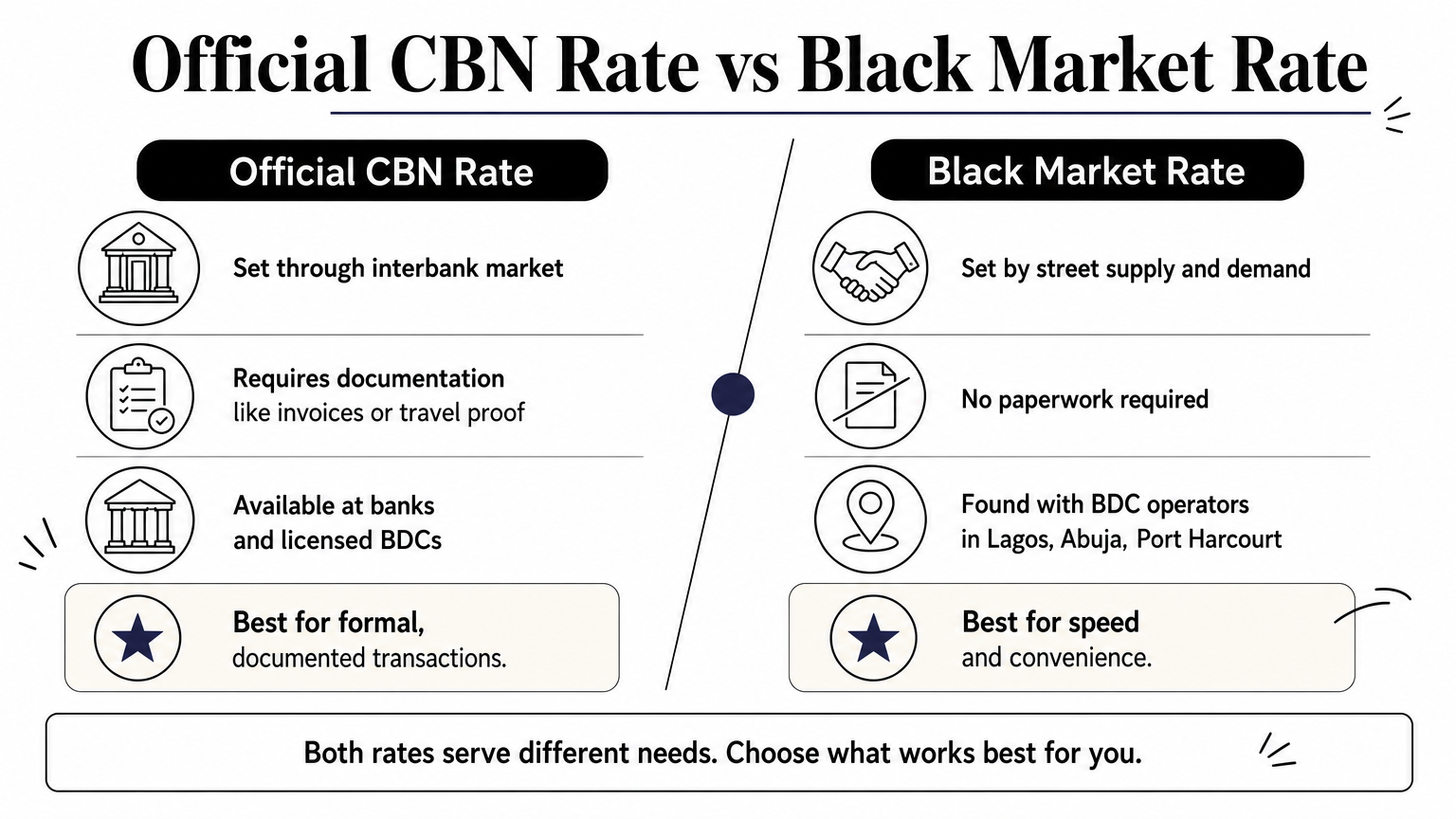
Banks and licensed BDCs quote the official CBN rate, a figure set through Nigeria’s interbank market and influenced directly by central bank policy. The black market rate, sometimes called the parallel market rate, comes from independent traders and BDC operators reacting to real-time supply and demand on the street. These two numbers rarely align, and the gap between them can run anywhere from ₦50 to over ₦150 per euro depending on how tight foreign currency supply is that week, the same split you see when converting 500 dollars to naira at official and black market rates.
Why the two rates diverge
Supply constraints explain most of the difference. When the CBN limits dollar and euro sales to banks, importers and travelers turn to the parallel market, pushing demand and prices higher there. Official channels also require documentation, proof of travel, invoices, or business registration, that many everyday users don’t have time to provide, so they pay a premium for convenience on the street instead.
The official rate tells you what the government says a euro is worth; the black market rate tells you what someone will actually pay for one right now.
Where to check each rate
- Official rate: CBN website, commercial bank rate boards, or bank mobile apps
- Black market rate: BDC operators in major markets like Lagos, Abuja, and Port Harcourt, or verified currency trading platforms
Getting the euro naira exchange rate right for your purpose, whether it’s a bank transfer or a street exchange, means matching the rate source to the transaction type. Using an official quote to negotiate on the street, or vice versa, only leads to confusion and a worse deal.
What causes the euro to naira rate to change
Several forces push the euro exchange rate to naira up or down within the same week, and none of them work in isolation. Nigeria’s foreign reserves position matters most, since low reserves limit how much foreign currency the CBN can release into the official market, forcing more demand toward the parallel market. Oil revenue plays a similar role because Nigeria still earns most of its dollar and euro inflows from crude sales, so a drop in oil prices tightens supply almost immediately.
Policy and market forces
Central bank interventions, interest rate decisions, and new forex regulations can shift the euro naira exchange rate within hours of an announcement. Inflation inside Nigeria also erodes naira value over time, which is why the parallel market rate has climbed steadily over recent years rather than staying flat. Global events matter too: European Central Bank policy changes, shifts in the euro’s strength against the dollar, and geopolitical tension in Europe all ripple into what you pay locally.
A weaker naira isn’t always about Nigeria alone; sometimes it’s the euro getting stronger against every currency, not just yours.
Demand-side pressure
Seasonal demand spikes explain a lot of the day-to-day noise in the exchange rate of euro to naira today:
- School resumption periods, when parents rush to pay European tuition
- Festive seasons, when travel and remittances both surge
- Import restocking cycles, when wholesalers need euros for European suppliers
- Political uncertainty, which pushes people to hold foreign currency as a hedge
Watching these patterns helps you anticipate movement instead of reacting to it after the rate has already shifted against you.
Staying on top of the euro to naira rate
Knowing the euro exchange rate to naira isn’t a one-time check, it’s a habit worth building if euros touch your budget in any regular way. Rates move on reserves, oil earnings, policy announcements, and plain seasonal demand, so the number that worked last week may already be stale today. Reliable conversions come from matching the right rate, official or parallel, to the transaction you’re actually making, then confirming it again right before you commit any money.
Smart readers don’t rely on a single stale figure; they track both the official CBN rate and the black market quote side by side, especially before big transfers, tuition payments, or supplier deals. That small discipline protects thousands of naira over time.
Stay ahead of these shifts and every other story shaping Nigeria’s economy by making Mcebisco’s daily Nigeria news and market updates part of your routine.