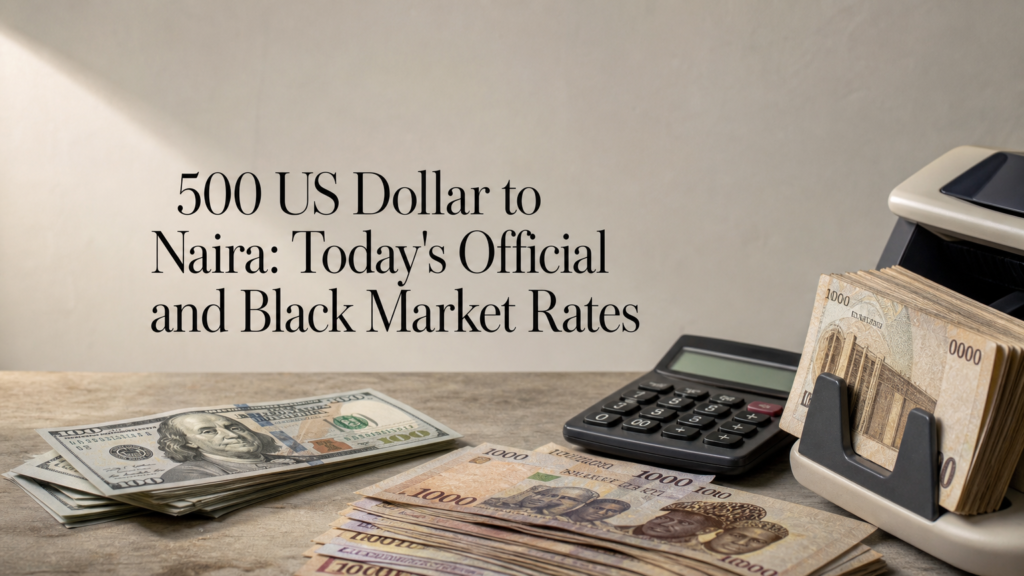

If you’re trying to work out what 500 us dollar to naira comes to today, you already know the answer changes depending on where you look. The official rate from the Central Bank of Nigeria rarely matches what you’ll get from a street-side bureau de change in Lagos or Abuja, and that gap can mean tens of thousands of naira on a single transaction. Whether you’re receiving money from family abroad or sending funds home, that difference matters.
This article gives you the numbers you need right now: the official exchange rate and the black market rate for converting 500 dollars, side by side, so you can see exactly what you’re working with before you exchange a single dollar.
We’ll break down how each rate is calculated, why the naira keeps sliding against the dollar, and what actually drives the parallel market price higher than the CBN figure. You’ll also get practical guidance on where to convert your dollars safely and how to avoid losing money to bad exchange deals or outright scams.
Why the 500 dollar to naira rate keeps changing
Several forces push the 500 dollar to naira figure up or down within the same week, sometimes within the same day. Nigeria runs a managed float system, which means the Central Bank of Nigeria sets an official reference rate while market forces still push the parallel or black market rate in a different direction. Add in oil revenue swings, diaspora remittance patterns, and plain old speculation, and you get a currency that never sits still for long.
Central Bank policy and forex supply
Monetary policy decisions from the Central Bank of Nigeria directly shape how many dollars flow into the official market on any given day. When the CBN sells more dollars to commercial banks and bureau de change operators, the naira firms up against the dollar. When forex reserves tighten and the bank rations supply, businesses and individuals turn to the parallel market to source dollars, and that extra demand drives the unofficial rate higher. Interest rate changes, import restrictions, and forex auction rules all filter down to what you pay for 500 dollars at your local exchange point.
Oil revenue and dollar scarcity
Nigeria still earns most of its foreign exchange from crude oil exports, so global oil prices have an outsized effect on how much dollar liquidity exists in the country. Falling oil prices mean fewer dollars entering government coffers, which means less forex available for the CBN to release into the banking system. Scarcity at the top trickles down fast, and within weeks you’ll notice bureau de change operators quoting higher prices for the same 500 dollars you priced a month earlier.
Speculation, hoarding, and diaspora demand
Traders and everyday Nigerians who anticipate further naira depreciation often hoard dollars rather than spend them, which shrinks the pool of currency available for sale and pushes prices up further. Remittances from the diaspora add another layer: when Nigerians abroad send dollars home through informal channels instead of licensed money transfer operators, that cash bypasses the official market entirely and feeds the parallel rate instead.
The wider the gap between what the CBN offers and what people can actually find, the more the black market rate climbs.
Political and inflation pressures
Inflation erodes confidence in the naira’s purchasing power, and every time inflation data comes in worse than expected, you tend to see a corresponding jump in the dollar rate. Uncertainty around elections, policy reversals, or major economic announcements also spooks currency traders, who respond by pulling back naira and buying dollars as a hedge. This is why the 500 dollar to nigerian naira conversion you see today can look meaningfully different from the one you calculated last month, even without any single dramatic event triggering the change. Tracking these underlying pressures, rather than just the daily number, gives you a better sense of where the rate is headed next.
How to calculate 500 dollars in naira today
Working out 500 dollars in naira is simple math once you know which rate you’re using. Multiply 500 by the naira value of one US dollar, and you get your total. The tricky part isn’t the arithmetic, it’s picking the right exchange rate, since the official CBN figure and the parallel market figure can differ by a wide margin on any given day.
The basic formula
Here’s the calculation broken down step by step:
Amount in Naira = 500 x (Exchange Rate per 1 USD)
So if the rate you’re using is ₦1,500 per dollar, your math looks like this:
500 x 1,500 = ₦750,000
Change the rate to ₦1,650 per dollar, and the same 500 dollars becomes ₦825,000. That ₦75,000 swing shows exactly why the rate you plug in matters more than the formula itself.
Sample calculations at different rates
Use this table as a quick reference while you check today’s actual figures:
| Rate per USD | 500 USD in Naira |
|---|---|
| ₦1,450 | ₦725,000 |
| ₦1,500 | ₦750,000 |
| ₦1,600 | ₦800,000 |
| ₦1,700 | ₦850,000 |
A ₦100 shift in the exchange rate changes what you get for 500 dollars by ₦50,000, so always confirm the current figure before you commit to a transaction.
Where the rate comes from matters
Before you finalize any conversion, decide which rate applies to your situation. Banks and licensed transfer operators typically use a rate close to the official CBN figure, while street exchanges and many peer-to-peer deals reflect the parallel market price. Getting 500 dollar to naira figures from an unverified source can leave you shortchanged, so cross-check with at least two reliable sources, such as your bank’s app and a licensed bureau de change, before you exchange or receive funds.
Official rate vs black market rate for 500 dollars
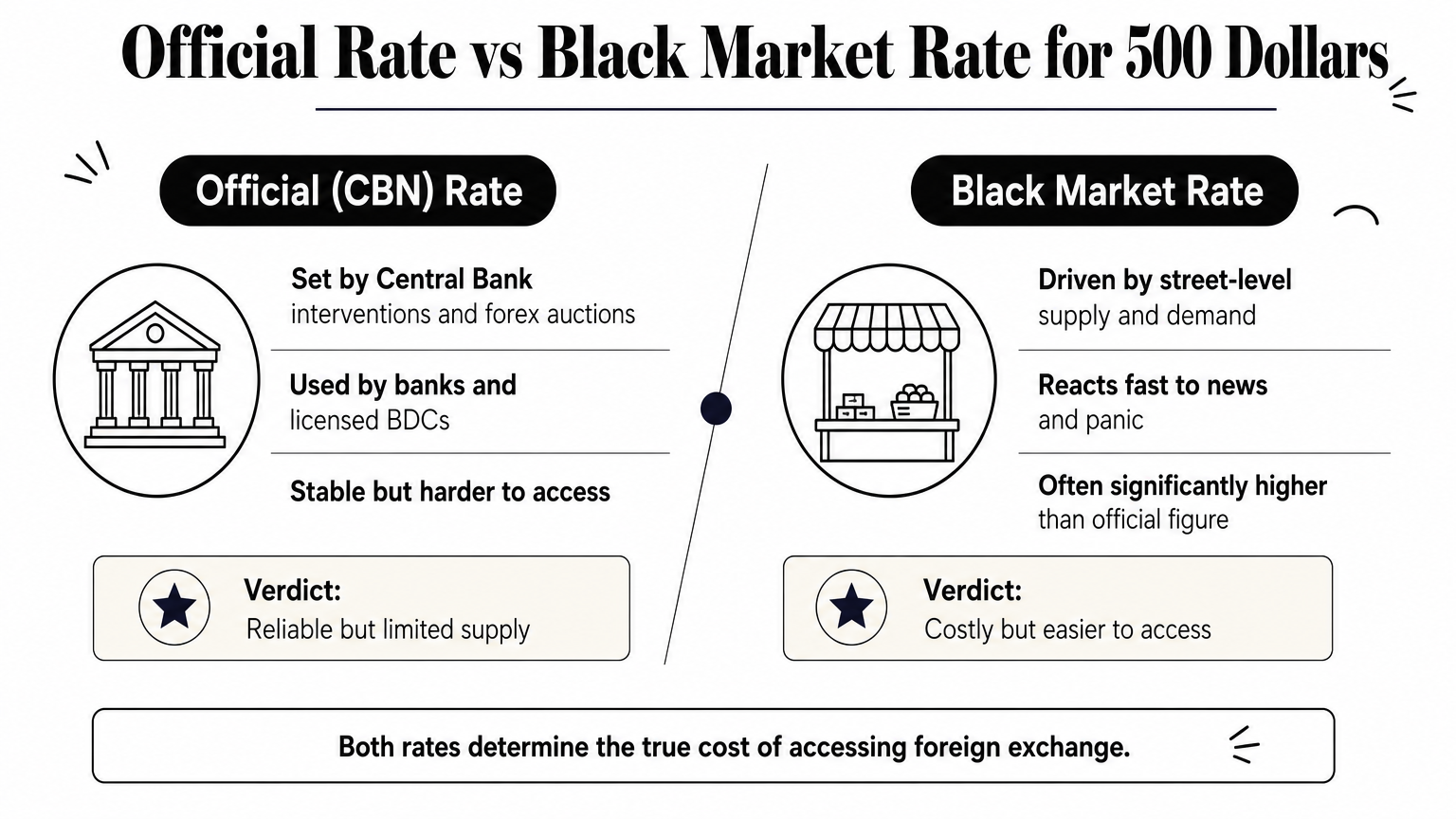
Getting 500 dollar to naira right means picking a lane first, because the official and parallel figures rarely tell the same story. The Central Bank of Nigeria publishes a reference rate that commercial banks, licensed bureau de change operators, and government transactions are supposed to follow. The black market, often called the parallel market, operates outside that structure entirely, driven by street-level supply and demand rather than policy. Knowing which figure applies to your transaction saves you from a nasty surprise when you actually show up to exchange cash.
What the official rate reflects
Banks and CBN-licensed operators price your dollars using the official exchange rate, which moves in response to CBN interventions, forex auctions, and monetary policy decisions. This rate tends to be more stable day to day, but it’s also less accessible: banks often ration dollar sales, and getting 500 dollars converted through official channels can involve paperwork, transaction limits, or waiting periods that street exchanges skip entirely.
Why the black market persists
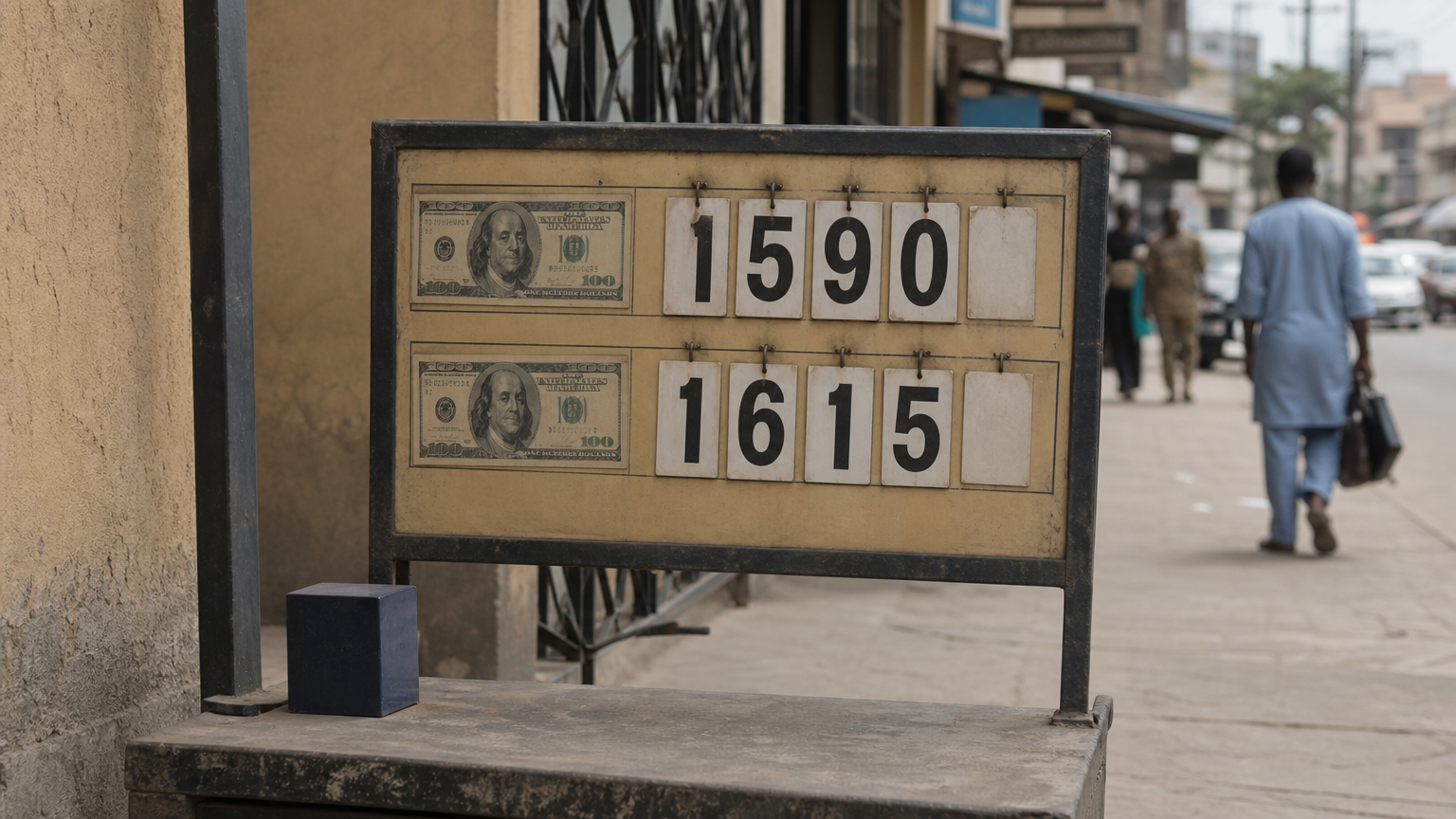
Scarcity keeps the parallel market alive. When official channels can’t meet demand, people turn to street traders, online forex groups, and informal networks willing to sell dollars at a premium. This rate reacts faster to news, panic, and speculation, which is why it can spike overnight even when the official figure barely moves.
| Rate type | Typical source | Price behavior |
|---|---|---|
| Official (CBN) | Banks, licensed BDCs | Stable, policy-driven |
| Black market | Street traders, informal networks | Volatile, demand-driven |
The official rate tells you what the government wants the dollar to cost; the black market tells you what people are actually willing to pay for it.
Comparing both figures before converting 500 dollar to nigerian naira protects you from accepting a lowball offer or overpaying out of urgency.
Best ways to convert or receive 500 dollars in Nigeria
Choosing how you convert your 500 dollars in naira matters as much as knowing the rate itself. Some channels protect your money and give you a fair deal; others expose you to fraud or lopsided pricing. Weigh convenience against safety before you settle on a method, especially if you’re handling a one-time transfer from family abroad rather than a routine business transaction.
Bank transfers and licensed operators
Deposit money orders through your bank or a licensed international money transfer operator like Western Union, MoneyGram, or WorldRemit gives you a paper trail and a rate close to the official figure. Processing can take longer, and banks sometimes cap how much foreign currency they’ll convert in a single visit, but you get receipts and recourse if something goes wrong.
Bureau de change outlets
Go with a CBN-licensed bureau de change if you want speed without sacrificing too much safety. These outlets typically post their buying and selling rates for 500 dollar to naira conversions in plain sight, so you can compare a few locations before committing. Avoid unlicensed street traders entirely; the slightly better rate they quote rarely justifies the risk of counterfeit notes or an outright disappearing act once cash changes hands.
A fair rate from a licensed source beats a flashy rate from an unverified stranger every single time.
Diaspora apps and digital wallets
Mobile-first platforms built for Nigerians abroad, such as licensed fintech remittance apps, now handle 500 dollar to nigerian naira transfers directly into a Nigerian bank account within minutes. These apps often beat bank rates because they operate with lower overhead, and many display live exchange rates before you confirm the transaction, removing the guesswork entirely.
Comparing your options
| Method | Speed | Safety | Typical Rate |
|---|---|---|---|
| Bank transfer | Slow | High | Official |
| Licensed BDC | Fast | High | Near-parallel |
| Diaspora app | Fast | High | Competitive |
| Street trader | Fast | Low | Variable |
Stick with regulated channels whenever the amount matters to you.
Tips for getting the best rate on your dollars
Squeezing every naira out of your 500 dollar to naira exchange comes down to timing, comparison shopping, and a bit of patience. Small habits, repeated over several transactions, add up to real savings, especially when you’re converting on a regular basis rather than as a one-off.
Compare rates before you commit
Check at least three sources before exchanging: your bank’s app, a licensed bureau de change, and a diaspora remittance app if you’re receiving funds from abroad. Rates can differ by ₦20 to ₦50 per dollar between providers on the same day, and on 500 dollars that gap alone can mean an extra ₦25,000 in your pocket. Never accept the first quote you see, no matter how convenient it feels in the moment.
A five-minute comparison across three sources often saves more than an hour of haggling with one trader.
Time your transaction
Exchange rates often move within a single week, so watch for dips before converting a large sum. Avoid exchanging right after major economic announcements or political news, since traders tend to spike prices during periods of uncertainty. If you can wait a few days without hardship, monitoring the trend for even 48 hours can put you in a better position.
Practical steps to protect your money
Follow this checklist whenever you’re converting or receiving dollars:
- Verify the operator’s license with the CBN before handing over cash.
- Ask for a written receipt on every transaction, no exceptions.
- Count your naira on the spot, in front of the person handing it to you.
- Avoid public exchange spots where crowds and distraction make short-changing easier.
- Use apps with locked-in rates rather than verbal quotes that can shift mid-transaction.
Watch for hidden fees
Some operators quote an attractive headline rate for 500 dollar to nigerian naira conversions, then tack on service charges or commission that eat into your total. Ask upfront whether the quoted figure is the final amount you’ll receive, and get that confirmation before you agree to anything.
Staying on top of the dollar to naira rate
Getting a clear read on 500 us dollar to naira isn’t a one-time task. The gap between the official and black market figures shifts with oil prices, CBN policy, and plain old market sentiment, so the number that worked last week might shortchange you today. Rely on the formula, cross-check both rates, and pick a conversion channel that matches how much safety and speed you actually need.
Smart conversions come down to habit, not luck. Compare at least two sources before every transaction, verify your operator’s license, and never let a flashy headline rate distract you from hidden fees. Those small checks protect the naira you work hard for, whether you’re receiving family support or handling business funds.
Exchange rates move fast, and Nigeria’s news cycle moves just as fast around them. For daily updates on the economy, forex policy, and everything else shaping the naira, follow Mcebisco’s Nigeria news coverage before your next transaction.