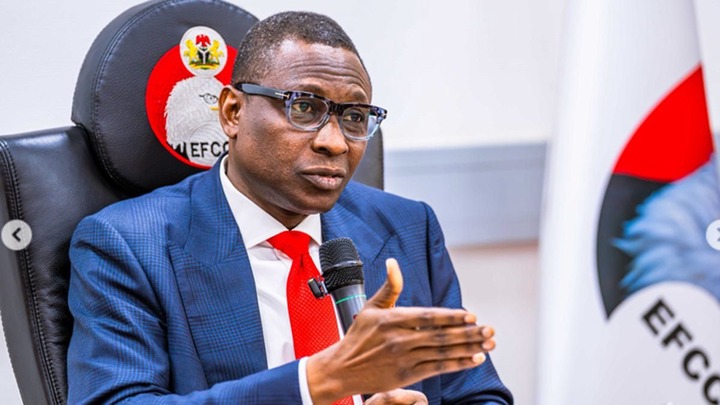

The Chairman of the Economic and Financial Crimes Commission (EFCC), Olanipekun Olukoyede, has warned religious leaders against diverting tithes, offerings, zakat and other funds belonging to religious organisations into their personal businesses.
Olukoyede described the diversion of funds entrusted to churches, mosques and other religious institutions as criminal, urging religious organisations to establish clear regulatory compliance mechanisms to prevent financial mismanagement and abuse of entrusted resources.
The EFCC chairman made the remarks at the 2026 Second Council Meeting of the Nigeria Inter-Religious Council (NIREC), held under the theme, “Shared Sacred Flourishing in Nigeria.”
Olukoyede Urges Churches, Mosques to Separate Personal and Organisational Finances
Speaking at the interfaith gathering, Olukoyede stressed the importance of religious leaders leading by example in Nigeria’s fight against corruption. He noted that followers often emulate the conduct and values demonstrated by their leaders.
According to the EFCC chairman, religious organisations are registered as not-for-profit entities, meaning funds received on behalf of such institutions should be kept in designated organisational accounts and used for their intended purposes.
He cautioned religious leaders who operate legitimate private businesses against mixing their personal finances with funds belonging to their religious organisations.
“You are not supposed to mingle it. There’s nothing that says you can’t do another vocation. You sell cars, you have a farm and all of that.
“Don’t mix the money from the purse of your organisation with that of your own personal money. Don’t do that. When money is paid to your organisation, don’t divert it to your business.
“That is criminal,” Olukoyede said.
He encouraged religious leaders to maintain transparent financial structures that clearly distinguish their personal assets and business income from funds contributed by members of their churches, mosques and other religious bodies.
EFCC Chairman Recalls Alleged Irregularities in Pilgrimage Funding
Olukoyede also spoke about investigations previously conducted by the EFCC into institutions responsible for sponsoring religious pilgrimages, alleging that investigators uncovered substantial financial irregularities.
He said that during his previous service at the commission, including his time as Chief of Staff and Secretary, the EFCC investigated Christian and Muslim pilgrimage boards.
“Some of the discoveries we made were mind-boggling,” he said.
According to Olukoyede, investigators allegedly discovered a situation in which almost 75 per cent of government funds released for the sponsorship of pilgrims in one location had been stolen by officials of the organisations.
The claim, as presented by the EFCC chairman, highlights concerns about financial accountability, oversight and transparency in religious institutions and government-funded pilgrimage programmes.
The allegations were made in the context of his call for stronger financial controls and should be distinguished from any independently established findings concerning specific individuals or institutions.
Olukoyede Calls for Regulatory Compliance Templates
The EFCC chairman urged religious organisations to develop regulatory compliance templates that would establish clear boundaries between organisational finances and the personal funds of religious leaders.
He said such frameworks would help religious institutions identify the limits of acceptable financial conduct and prevent the diversion of funds entrusted to them.
“Go and develop regulatory compliance templates for your religious organisation so that you know where you don’t have to cross the line. You know where the boundary is drawn. You know the money that belongs to you and the money that does not belong to you,” he said.
Olukoyede maintained that funds contributed by members of religious communities are held in trust for the propagation of their faith and the fulfilment of the purposes for which the funds were donated.
He called for greater responsibility among religious leaders in managing these resources, emphasising the need for transparent financial practices and institutional accountability.
EFCC, Religious Institutions Must Work Together Against Corruption
Beyond financial oversight, Olukoyede called on churches and mosques to play a more active role in Nigeria’s anti-corruption efforts by helping shape the moral character and conscience of citizens.
He explained that while the EFCC has the mandate to investigate and prosecute financial crimes, religious institutions can influence the values and personal conduct that shape people’s decisions.
“The EFCC can investigate a person’s conduct. Faith communities can influence that person’s character.
“We can prosecute fraud. Religious teachings can cultivate honesty. We can confiscate illicit wealth.
“Churches and mosques can challenge the values that make society worship wealth without questioning its source,” he said.
The EFCC chairman urged religious leaders to promote honest living and discourage the pursuit of wealth without regard to its source. He argued that religious institutions have an important role to play in addressing the moral foundations of corruption in society.
According to him, preventing corrupt practices before they occur is as important as investigating and punishing financial crimes after they have been committed.
Religious Leaders Have a Responsibility to Promote Honest Living
Olukoyede described religious institutions as having an “extraordinary responsibility” in Nigeria’s anti-corruption campaign, stressing the importance of restoring the value of integrity and honest living.
“It is important to state here that one of the most consequential contributions religious leaders can make to shared sacred flourishing is to restore the moral dignity of honest living,” the EFCC chairman said.
His remarks centred on the need for religious organisations to strengthen internal financial controls, separate institutional funds from personal businesses and promote ethical conduct among their leaders and members.
The EFCC chairman’s message reinforces the importance of accountability, transparency and responsible stewardship of funds contributed to religious institutions, while calling for collaboration between faith communities and anti-corruption agencies in Nigeria.