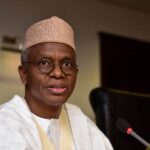
The Emir of Katsina, Alhaji Abdulmumini Kabir Usman, has urged Senator Abdulaziz Abubakar Yari to speak honestly about Nigeria’s worsening security and economic challenges, warning that insecurity is preventing farmers from accessing their farmlands.
The monarch made the remarks when Yari, a former governor of Zamfara State and a prominent All Progressives Congress (APC) figure, visited his palace in Katsina State earlier this week.
Yari is serving as Director-General of the APC Presidential Campaign Council for President Bola Tinubu’s anticipated 2027 re-election bid.
The Emir’s comments, captured in a Hausa-language video, focused on insecurity, economic hardship, political dishonesty and the responsibility of public officeholders to improve the lives of ordinary Nigerians.
Emir Urges Yari to Speak the Truth About Nigeria
Addressing the senator, Usman said political leaders must recognise their responsibility to defend the interests of the people and confront the country’s pressing challenges.
“Director-General, you are now in a position of leadership. This is not just about this place; it concerns the entire country. We are all children of this nation, and we must stand for the truth,” the Emir said.
He urged Yari to communicate his concerns to other political leaders, stressing that leadership should be driven by genuine concern for public welfare rather than personal interests or political rivalries.
The monarch also emphasised the importance of compassion and service, invoking religious teachings to argue that leaders should help others and work towards improving their living conditions.
“I swear to God, unless you love people, help them and work with them, you cannot expect Allah to love you, stand by you and help you,” he added.
Insecurity Prevents Farmers From Accessing Farmlands
The Emir expressed concern about the impact of insecurity on farming communities, particularly in northern Nigeria, where threats to rural livelihoods can affect agricultural production and household incomes.
He questioned why farmers were being prevented from carrying out their activities while political leaders continued to engage in political competition.
“Why are we drifting apart? Farmers have been prevented from carrying out their activities,” Usman said.
He called on political leaders and other influential figures to take practical steps towards restoring security and protecting communities whose economic activities have been disrupted.
The monarch’s remarks highlighted the connection between public safety, farming and the ability of Nigerians to earn a living.
Katsina Emir Condemns Political Dishonesty
Usman also criticised what he described as dishonesty in political communication, urging politicians to stop misleading the public and making claims they know to be false.
He maintained that truthfulness should remain a guiding principle for political leaders, regardless of their ambitions or party affiliations.
“Lying in this manner, when you come to me and claim something happened when you know it did not, is unacceptable. May Allah guide us to what is right, I swear to God,” the Emir said.
While discussing religious teachings on exceptional circumstances in which deception may be permitted, the monarch argued that such exceptions should not be used to justify falsehood in ordinary political engagements.
“As for me, wherever I go, whenever I open my mouth, I speak the truth. I have said this based on the Holy Quran,” he added.
His comments underscored his call for greater honesty and accountability among those seeking or exercising political power.
Emir Says Politics Should Focus on Dialogue, Not Hostility
The traditional ruler further argued that politics should be based on persuasion, consultation and constructive engagement rather than insults, hostility or attempts to undermine opponents.
According to Usman, political differences should provide an opportunity for discussion and the exchange of ideas, not a reason for confrontation.
“Yes, politics, it must be about politics. What is politics? You convince me to accept your conviction,” he said.
“You must be wise enough to listen to what I have to say or consider my point of view. That is politics. It is not fighting or condemning others.
“It is not about backbiting, envy or malice.”
The Emir maintained that leaders should listen to differing opinions and work collectively to address the problems confronting the country.
He also criticised political behaviour that, in his view, places personal ambition above the common good and makes cooperation more difficult.
Monarch Invokes Quran and Bible on Public Service
Usman referred to teachings in both the Holy Quran and the Bible, saying they encourage people to consider the welfare of others rather than prioritise personal gain.
He lamented what he described as a decline in these values among some political actors, accusing them of concentrating on condemning opponents, undermining others and preventing people from earning a livelihood.
“It has been said, ‘Fellow citizens, we must come together, discuss matters and offer explanations. This is also about consultation.’ Even the Holy Quran and the Bible teach us that the best person among you is the one who puts the interests of others before his own,” he said.
The monarch questioned why political leaders continued to engage in conduct that deepened divisions instead of promoting cooperation and national development.
“God will not change the condition of a people until they change what is within themselves,” he said, referring to a religious principle about personal and collective responsibility.
He warned that people in positions of authority should not assume they would escape the consequences of treating others unfairly.
“Whoever you are, I repeat, whoever you are, if you treat another person with contempt, I swear to God, you will eventually experience something you do not like,” Usman said.
Emir Raises Concerns Over Declining Industries in Kaduna
Beyond insecurity and political conduct, the Emir raised concerns about the condition of industrial establishments in Kaduna State.
He cited the DIC and Peugeot company as examples of businesses whose decline, in his view, should concern political leaders and regional elders.
“If you go to Kaduna, look at the DIC and the Peugeot company. Where are they now? They have all collapsed. Why?” he asked.
The monarch criticised what he described as silence among influential figures over the economic challenges affecting the region.
“And we have remained silent. Who are the elders?” he asked, before urging leaders to take action.
“We have to speak. We have to speak. We must stand up and take action.”
His comments broadened his message beyond political honesty, drawing attention to industrial activity, employment and the economic opportunities available to Nigerians.
Yari’s Role in APC’s 2027 Preparations
Yari, a former Zamfara State governor and serving senator, occupies a prominent position in the APC’s preparations for President Bola Tinubu’s anticipated 2027 re-election campaign.
The Emir used the visit to urge the senator to recognise the responsibilities associated with his political position and communicate the concerns of ordinary citizens to other leaders.
Usman maintained that leadership should be measured by its impact on people’s lives rather than by status, wealth or political privilege.
His remarks centred on the need to address insecurity, protect farmers, promote honest political communication and improve economic conditions.
The monarch also called on traditional rulers, politicians and other influential figures to use their positions to demand practical solutions to the challenges preventing Nigerians from earning a living.
Ultimately, his message to Yari was that political leadership must be accompanied by truthfulness, consultation and a demonstrable commitment to the welfare of the people.